

Dear Aspiring Leaders, Leadership is often spoken about through the language of vision, inspiration, strategy and success. Yet some of the most defining moments in leadership happen quietly, behind closed doors, in conversations that require honesty, courage and care. Conversations that many leaders find difficult are addressing underperformance, challenging professional behaviours, giving developmental feedback, managing conflict, speaking to a disappointed parent, or helping a colleague see a blind spot they may not yet recognise.Difficult conversations are not a sign that leadership has failed. Often, they are a sign that leadership is being exercised responsibly. Over the years, I have learned that avoiding a difficult conversation may feel kind in the moment, but it is rarely kind in the long term. When concerns are left unspoken, standards become unclear, resentment quietly grows, and trust begins to weaken. True leadership requires the courage to speak honestly and the compassion to do so with dignity. This is where the idea of Radical Candor becomes deeply relevant. Kim Scott describes Radical Candor as the ability to care personally while challenging directly. For me, this captures one of the most important balances in educational leadership. We cannot lead people well if we avoid truth. Equally, we cannot lead people well if truth is delivered without empathy.The best leaders learn to hold both. Why Difficult Conversations Matter In schools, relationships matter deeply. We work in human environments where emotions, pressures, expectations and responsibilities intersect every day. Because of this, leaders sometimes hesitate to have difficult conversations. We worry about damaging relationships, upsetting colleagues, being misunderstood, or appearing too harsh. But silence can also damage relationships. When leaders avoid important conversations, people are left to guess what is expected. Strong performers may feel frustrated when standards are not upheld. Those who need support may continue struggling without clarity. Teams may begin to sense inconsistency, and inconsistency is one of the fastest ways to weaken trust. A difficult conversation, handled well, is not an act of criticism. It is an act of care. This is the heart of courageous and compassionate leadership. Care Personally Before You Challenge Directly Radical Candor begins with care. Without care, direct challenge can feel cold, harsh or punitive. In education, where people give so much of themselves emotionally, leaders must never forget the human being behind the performance concern. Caring personally means taking time to understand the person, their context, their strengths and their challenges. It means knowing that a teacher is not defined by one difficult lesson, one missed deadline, or one moment of poor judgement. It means seeing the whole person, not just the issue in front of you. However, care does not mean avoiding challenge. Sometimes leaders confuse kindness with comfort. We soften the message so much that the person leaves the conversation unclear about the concern. We hint instead of saying what needs to be said. We over-explain, apologise unnecessarily, or wrap the message in so many layers of reassurance that the main point disappears.That is not kindness. That is avoidance. Prepare Yourself Before the Conversation. Before entering a difficult conversation, a leader must pause and reflect. The way we enter the conversation often shapes the way it unfolds. I have found it helpful to ask myself: What is the real concern? What evidence do I have? What impact is this having on students, colleagues, parents or the wider team? What outcome am I hoping for? Am I entering this conversation to prove a point, or to support improvement? This reflection matters because difficult conversations can easily become emotional. Leaders are human too. We may feel disappointed, frustrated, defensive or anxious. But our responsibility is to remain calm, fair and focused. A leader’s emotional steadiness can turn a tense conversation into a constructive one. This does not mean removing emotion completely. It means managing emotion with maturity. The other person may feel upset, surprised or defensive. They may disagree. They may explain their perspective strongly. In those moments, the leader’s role is not to react, but to listen, clarify and bring the conversation back to purpose. One of the greatest lessons I have learned in leadership is that clarity is a form of kindness. People cannot improve what they do not understand. If feedback is vague, improvement becomes unlikely. If expectations are unclear, accountability becomes unfair. A difficult conversation should therefore include clear language: “This is the concern.” “This is the impact.” “This is what needs to change.” “This is the support available.” “This is how we will review progress.” Clarity does not require harshness. In fact, the most effective difficult conversations are often calm, respectful and measured. The leader does not need to raise their voice or assert power. The strength lies in the precision of the message and the sincerity of the intention.There is a difference between saying:“You are not doing well” or saying: “I want to talk about the consistency of your lesson preparation. Over the past three weeks, planning has been submitted late on several occasions. This is affecting team organisation and pupil learning. I want us to agree what needs to change and how I can support you.” The second approach is clear, specific and respectful. It challenges directly, but it does not attack the person. Listen Without Losing the Message Difficult conversations should never become one-way lectures. Listening is essential. Sometimes there is context we do not yet know. A colleague may be experiencing personal difficulty. A system may be unclear. A workload issue may need attention. A misunderstanding may have occurred. Listening allows leaders to respond fairly rather than simply react quickly.However, listening does not mean diluting the message. This is another important leadership balance. We can listen with empathy while still holding the line. We can understand someone’s circumstances while still being clear about expectations. We can acknowledge difficulty while still saying, “This needs to improve.” Compassion and accountability are not opposites. In strong leadership, they work together. A helpful phrase is: “I understand this has been challenging, and I

Women Leaders: Strength, Compassion, and Courage in Educational Leadership
Dear Aspiring Leaders, On this International Women’s Day, I find myself reflecting not only on the remarkable women who have shaped the world of education, but also on the quieter journeys of many women who lead every day within schools; often without fanfare, yet with extraordinary impact. Education has long been a profession shaped and sustained by women. Walk through the corridors of most schools and you will see women nurturing curiosity in classrooms, supporting families, mentoring colleagues, and holding together the invisible threads that make learning communities thrive. Yet leadership within education has not always recognised the depth of these contributions. Many women have had to grow into leadership while simultaneously navigating expectations, doubts, and the constant balancing of professional and personal responsibilities. Despite these challenges, women continue to shape educational leadership with a distinctive set of strengths – strengths that schools deeply need. Leadership Rooted in Empathy One of the most powerful qualities women bring into leadership is empathy. In schools, empathy is not a soft skill; it is a strategic strength. Understanding the emotional landscape of students, teachers, and families allows leaders to make decisions that are both thoughtful and humane. Throughout my own journey, empathy has guided many of my leadership choices. Whether supporting a struggling teacher, listening to a parent’s concern, or encouraging a student who had lost confidence, I have learned that leadership begins with understanding people before managing processes. As teachers, many women develop this sensitivity early. Years spent observing students, responding to their needs, and creating safe learning environments naturally cultivate a deep awareness of human behaviour. When these skills move into leadership roles, they become powerful tools for building trust and shaping positive school cultures. The Quiet Strength of Resilience Leadership rarely unfolds as a smooth path. It is filled with decisions that do not always go as planned, moments of self-doubt, and situations that test both patience and conviction. Women in educational leadership often demonstrate a remarkable resilience – the ability to remain steady, reflective, and solution-focused even during difficult moments. When I first began my journey as a classroom teacher, I did not imagine that leadership would one day become part of my path. My world then was my classroom, my students, and the daily effort to make learning meaningful. Over time, opportunities to take on responsibility began to appear. Each new role brought both excitement and uncertainty. There were moments when I questioned whether I was ready. There were decisions that required courage, conversations that required honesty, and challenges that required patience. Yet each experience became an opportunity to grow. Reflection became my compass. The more I reflected, the more confident I became in my values and purpose. Today, as a Deputy Head in a primary school, I recognise that resilience was built gradually; not through dramatic achievements, but through everyday perseverance and continuous learning. The Power of Relational Leadership Women often excel at relational leadership ; building trust, nurturing collaboration, and strengthening professional relationships. In schools, this relational strength becomes the foundation for effective leadership. Teams flourish when they feel heard, supported, and valued. Students thrive when they feel safe and understood. Parents engage more deeply when they sense authenticity and care. Throughout my leadership journey, building relational trust has been central to how I lead. I have always believed that people follow leaders not because of authority, but because of trust. Trust grows from consistency, fairness, and presence. One lesson I learned early in my leadership journey has stayed with me ever since: people leave organisations because of people. That thought shaped my leadership philosophy. I promised myself that I would always lead with empathy, fairness, and integrity. If you are a woman working in education and quietly wondering whether leadership could be part of your journey, my message to you is simple: Leadership begins long before the title- it begins when you support a colleague who is struggling, it begins when you take initiative to improve something in your school, it begins when you speak up for what is right for you and your children. You do not need to have every answer before stepping forward. In fact, no leader ever truly does. What matters most is your willingness to keep learning, to reflect on your experiences, and to lead with integrity. The qualities many women naturally bring into education – empathy, resilience, collaboration, and reflective thinking ; are not secondary skills. They are precisely the qualities that modern educational leadership requires. As we celebrate International Women’s Day, let us recognise the countless women in schools who lead with compassion, courage, and quiet determination. Their leadership may not always seek recognition, but its impact is profound. It shapes classrooms, supports communities, and inspires the next generation of learners and leaders. Happy International Women’s Day to all my aspiring women leaders!!

Leading Through Uncertainty: Educational Leadership in Difficult Times
Dear Aspiring Leaders, Schools are often seen as places of stability. Classrooms run on routines, pre-decided and approved academic calendars guide our days, and learning continues with a reassuring rhythm. Yet there are moments when the world outside the school gates feels uncertain; moments when global events, regional tensions, or social anxieties reach into our communities. Recent developments across the Gulf region have reminded many of us that uncertainty can quickly enter everyday life. In the UAE especially, where schools are wonderfully diverse communities bringing together families from across the world, global events can feel very personal. Students hear conversations at home, teachers follow the news, and parents naturally worry about safety and stability. During such times, educational leadership takes on a deeper meaning and then Leadership is no longer only about curriculum, strategy or improvement plans. It is all about calmness, reassurance, and humanity. In difficult moments schools become anchors of stability. The Leader as a Source of Calm One of the most important responsibilities of a leader during uncertain times is emotional steadiness.Students and staff instinctively look to leaders for cues about how to feel and how to respond. A leader’s tone, presence, and communication often shape the emotional climate of the school. This does not mean leaders must pretend to have all the answers. Rather, it means modelling composure, thoughtful judgement, and reassurance.Educational psychologist Andy Hargreaves reminds us that leadership is deeply emotional work. During challenging times, the emotional presence of a leader becomes just as important as their strategic decisions. Sometimes the most powerful leadership action is simply this: to remain calm, listen carefully, communicating clearly and reassure the community that the school remains a safe and supportive place. Protecting Psychological Safety When external events feel uncertain, the internal environment of a school must become even more psychologically safe.Students may carry fears or questions they do not fully understand. Teachers may worry about their families, particularly in international communities where loved ones may live in different regions of the world. Leaders must create space for conversation without allowing anxiety to overwhelm the school environment. Amy Edmondson’s work on psychological safety reminds us that people perform best when they feel safe to speak, ask questions, and express concerns. In times of difficulty, this principle becomes even more important. The school community during uncertainty thrives when: Communication with Clarity and Care During uncertain situations, rumours and misinformation can spread quickly, particularly through social media. Educational leaders therefore play a crucial role in clear and measured communication. Keep the communication transparent, factual, calm and reassuring In the UAE, schools benefit from strong government leadership and clear national communication structures. Trusting official guidance and sharing information responsibly helps communities remain confident and well-informed. The goal is not to amplify fear, but to reinforce reassurance and clarity. Schools as Communities of Care One of the most beautiful aspects of schools in the UAE is their diversity. Students, teachers, and families represent cultures and backgrounds from across the world. During global or regional tensions, this diversity becomes even more important. Educational leaders must ensure that schools remain places of respect, inclusion, and empathy. Conversations should emphasise understanding rather than division. Students should feel proud of their identities while learning to respect those of others. In moments when the world feels fragmented, schools can quietly model what unity looks like. Education has always been one of humanity’s greatest tools for building understanding across cultures. Returning to Purpose Difficult times often remind leaders of the deeper purpose behind education. Beyond assessments and curriculum frameworks lies something far more significant: the development of thoughtful, compassionate, and resilient young people. When the world feels uncertain, schools must continue doing what they do best: nurture curiosity, model respect and kindness, help children feel safe. Educational leadership, therefore, becomes an act of service not only to students but to society itself. Every calm conversation, every reassuring assembly, every supportive interaction with a colleague contributes to a culture of stability and hope. If you are leading in education during times of uncertainty, remember that leadership does not require perfection. What your community needs most is not a leader with all the answers, but a leader who demonstrates: I have been very fortunate to have learnt from the best of the leaders and continue to learn.
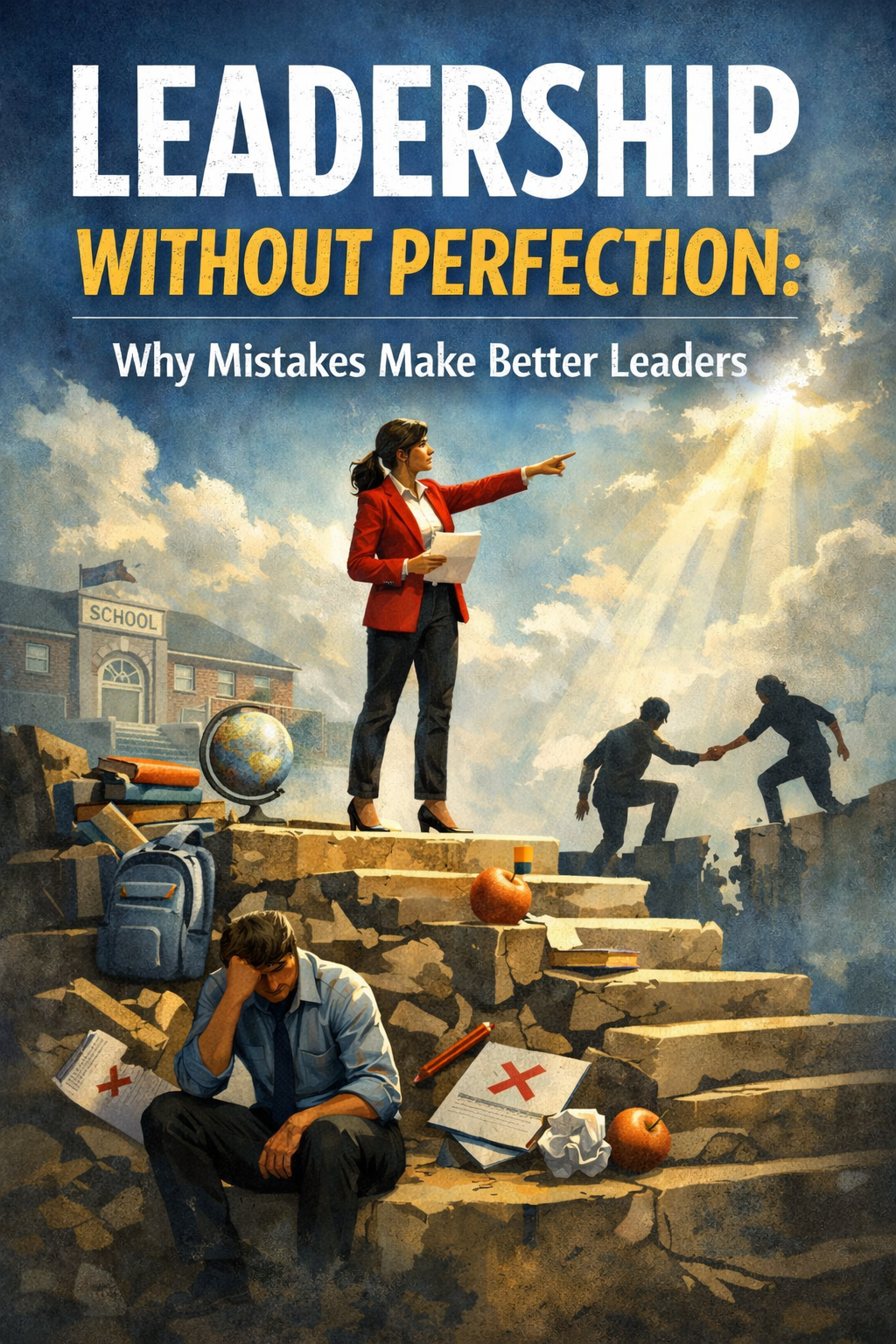
Leadership Without Perfection: Why Mistakes Make Better Leaders
Dear Aspiring Leaders, For a long time, I believed that leadership required certainty with clear answers, confident decisions, and an outward sense of composure. I thought mistakes were something to quietly correct and quickly move past, preferably unnoticed. Experience and research have taught me otherwise. Leadership is not weakened by imperfection.It is weakened by fear of admitting it. The Myth of the “Perfect Leader” In the early days of my leadership journey, I felt an unspoken pressure to appear capable at all times. I always thought that I was not supposed to make mistakes as it would raise questions on my professional abilities. As a middle leader, I equated confidence with certainty and authority with control. I avoided admitting doubt, worried it might undermine credibility. Research tells us the opposite. Amy Edmondson describes psychological safety as the belief that people can speak up, ask questions, and admit mistakes without fear of embarrassment or blame. Her research shows that teams perform better when leaders openly acknowledge errors because it creates trust, learning, and collective responsibility. When a Decision Didn’t Land Well I remember introducing a curriculum decision I genuinely believed was right. The rationale was sound. The intention was positive. But in practice, it didn’t land as expected. Staff struggled, the pace felt wrong, and confidence dipped. My instinct was to defend the decision, after all, leaders are expected to “stand firm.” Instead, I paused. I invited feedback. I listened to my teachers and leaders without interrupting or justifying. I acknowledged that I had misjudged the timing and level of support needed. Together, we reshaped the plan. What followed was powerful. The culture shifted from compliance to collaboration. Trust deepened, not because I had all the answers, but because I was willing to say: “I got this wrong. Let’s fix it together.” This aligns closely with the work of Michael Fullan, who argues that leadership in complex systems like schools is inherently imperfect. Change is non-linear, emotionally demanding, and unpredictable. Effective leaders learn with their teams, not ahead of them. Mistakes as Leadership Mirrors Mistakes have a way of revealing who we are under pressure. Over time, I learned to reflect not just on what went wrong, but how I responded: Donald Schön reminds us that professional growth depends on reflection-in-action and reflection-on-action. Leaders are not those who avoid error, but those who learn in the moment and revisit decisions with honesty and curiosity. Mistakes, when reflected upon, become leadership mirrors — revealing blind spots, values, and growth edges. As I moved into senior leadership, I became deeply aware that my response to mistakes set the tone for everyone else. When leaders hide errors, teams do the same. When leaders own them, teams feel safe to experiment, reflect, and improve. I have openly acknowledged missteps in meetings. I have spoken about decisions I would handle differently next time. Not because it was comfortable but because it was responsible. I have learnt with time that it is fine to mistakes and learn from them because I have seen my leaders making mistakes. Viviane Robinson highlights that leadership credibility is built through integrity, competence, and interpersonal respect rather than infallibility. Leaders who invite feedback and learn alongside staff have greater impact than those who rely on authority alone. Growth Lives Beyond Comfort Leadership will stretch you. There will be moments when: These moments are uncomfortable but formative. Each one sharpens judgement, deepens empathy, and strengthens moral courage. As Andy Hargreaves warns, cultures driven by fear of failure lead to risk-avoidance and superficial compliance. Cultures that normalise learning from mistakes sustain improvement and wellbeing over time. I often remind myself: If I am never uncomfortable, I am probably not growing. A Reframe for Aspiring Leaders If you are preparing for leadership or quietly growing into it here is what I wish I had known earlier: Your mistakes do not disqualify you from leadership. They shape you into one worth following.

Leading Without a Throne: What Game of Thrones Teaches Educational Leaders!
A very happy New Year to all my aspiring leaders. After stepping away for a short winter break; a time to rest, reflect, and recharge, I found myself revisiting the series Game of Thrones as part of my leisure time. As leaders, we rarely switch off completely; we naturally look for meaning, patterns, and lessons in the world around us. This series was no exception. What began as entertainment soon became an exercise in reflection. Beneath the spectacle of dragons, battles, and political intrigue lies a deeply human exploration of leadership; one shaped by power, trust, ego, morality, vision, and consequence. At first glance, the world of Westeros may seem far removed from the corridors of schools and classrooms. Yet the leadership challenges faced by its characters mirror many of the dilemmas educational leaders encounter daily: how to lead ethically, how to earn trust, how to manage power responsibly, and how to leave a meaningful legacy. For educational leaders, Game of Thrones offers both powerful metaphors and cautionary tales. It reminds us that leadership is not about titles or thrones, but about people, purpose, and the choices we make when no one is applauding. The reflections below may resonate most strongly with those familiar with the series, as certain characters are referenced to illustrate distinct leadership traits. 1. Titles Do Not Make Leaders: Character Does Some of the most powerful figures in Westeros fall not because they lack authority, but because they lack moral grounding. Ned Stark leads with integrity, fairness, and honesty. He does not manipulate, posture, or compromise his values. While this approach costs him politically, it earns him unwavering loyalty and deep respect. In schools, authority may come with a role, but influence is earned through trust. Staff and students follow leaders whose actions align with their values, even when those values are tested. Ethical leadership may feel risky in the short term, but it builds credibility that far outlasts any position and earns respect in the long run. 2. Fear Creates Compliance, Not Commitment Cersei Lannister rules through fear, control, and intimidation. Her power appears absolute, yet it is fragile. She stands isolated, surrounded by silence rather than loyalty. Fear-based leadership may produce obedience, but it never produces excellence. In educational settings, cultures built on anxiety, surveillance, or blame gradually erode trust, creativity, and morale. Sustainable improvement comes from psychological safety, not fear. 3. Leadership Is Service, Not Status The Night’s Watch exists not for recognition or glory, but for protection and service. Its leaders lead from the front, share hardship, and prioritise collective responsibility over personal ambition. Jon Snow exemplifies servant leadership: listening to others, learning from mistakes, and placing the mission above ego. Educational leadership, at its core, is an act of service- to students, colleagues, and communities. The most respected leaders are those who shoulder responsibility quietly, make difficult decisions with compassion, and remain grounded in purpose rather than recognition. 4. Power Without Empathy Leads to Isolation Daenerys Targaryen begins her journey as a leader shaped by empathy and a strong sense of justice. Over time, certainty replaces curiosity, and conviction hardens into absolutism. The result is isolation and ultimately, catastrophic decisions. Vision without reflection can be dangerous. In schools, leaders must remain open to challenge, feedback, and dissent. When leaders stop listening, they stop leading. Reflection, humility, and shared decision-making protect leaders from their own blind spots. 5. Loyalty Is Earned Through Relationship, Not Authority Throughout Game of Thrones, leaders who invest in relationships inspire loyalty that endures hardship. Those who treat people as expendable lose them when it matters most. In education, relational trust is everything. Staff do not give their best because of policies, frameworks, or inspections; they give their best when they feel valued, respected, and supported. Relationships are not a “soft skill” — they are the infrastructure of effective leadership. 6. Leadership Is Lonely — But It Shouldn’t Be Isolating Many rulers in Westeros fail because they rule alone. Councils are silenced, advisors ignored, and decisions made in isolation. Leadership can indeed be lonely, but it should never be solitary. The strongest educational leaders build teams, distribute leadership, and invite diverse perspectives. Collective leadership strengthens decision-making and protects leaders from burnout and tunnel vision. 7. Legacy Matters More Than Power In the end, Game of Thrones is not about who sits on the Iron Throne; it is about what remains once power fades. Characters are remembered not for their titles, but for how they treated others and what they stood for. In education, our legacy is not data dashboards or initiatives. It is people- the teachers we supported, the students we believed in, and the cultures we nurtured. Leadership is temporary; impact is lasting. Game of Thrones reminds us that leadership is complex, morally demanding, and deeply human. You do not need a throne to lead. You do not need power to make an impact. What you need is courage, empathy, reflection, and the willingness to serve something greater than yourself. Because the most powerful leaders are remembered not for how loudly they ruled — but for how deeply they cared.

Building a culture of collective leadership
Dear Aspiring Leaders, “Leadership is not about being in charge. It’s about taking care of those in your charge.” – Simon Sinek From I to We From the very start of my leadership journey, I have never used ‘I’ when addressing my team. It is always ‘we’. It is always a collective effort and a leader’s success is always built into the team’s success. Every member in the team is unique with different strengths. I have always believed that everyone is capable of making positive contributions in the team, even the difficult ones. Over time, I realised that leadership isn’t about how much others trust you, but how much you trust them. Trust needs to be a collective and mutual recognition. When people feel trusted, they stop waiting for permission and start taking ownership. They lead not because they have to, but because they want to. That shift from I to we is where authentic leadership culture begins to take root. From Personal Trust to Shared Ownership Every strong culture grows from a foundation of trust. But the kind of trust that sustains a team isn’t built on authority rather it’s built on shared purpose. As Michael Fullan reminds us, “The quality of education cannot exceed the quality of its teachers working together.” The same applies to leadership in any context. The more connected and empowered a team feels, the greater its capacity for collective success. I remember the first time I invited my team to co-design part of a curriculum plan. It was both exciting and uncomfortable. I had to let go of control, to allow ideas to flow without immediately editing or shaping them. The result was astonishing. The plan that emerged was richer, more creative, and far more relevant than anything I could have produced alone. The team suggested changes to my plan and my template which were very contextual. More importantly, the team owned it. They felt proud of what they had built together. That moment taught me that distributed trust doesn’t dilute vision, it deepens it. When trust expands, so does ownership. When ownership expands, excellence follows. Allow loud thinking, let them come up with silly ideas at the same time. They must know that no one is judging them. The Anatomy of a Healthy Team Culture Healthy team cultures don’t happen by chance; they are intentionally built and consistently nurtured. Below are five elements I’ve seen transform teams from groups of individuals into communities of purpose: Empowerment Through Distributed Leadership Leadership grows when it is shared. According to Leithwood’s work on distributed leadership, organisations thrive when leadership responsibilities are spread across many, not concentrated in one. This approach doesn’t undermine authority; it multiplies capacity. I witnessed this truth early in my senior leadership journey. A talented colleague was hesitant to lead a new project. She doubted her readiness, but I trusted her potential. I offered guidance, but I also gave her space to lead; to make decisions, test ideas, and reflect. Watching her confidence grow was a powerful reminder: when we trust others to lead, they don’t just rise to our expectations; they often surpass them. When leaders hold all the power, they hold all the pressure. But when power is shared, so is purpose. Empowering others is not about stepping back ; it’s about making space. The most rewarding moments in leadership aren’t the ones where you stand at the front of the room, but the ones where you step aside and see others leading beside you. Listening, Learning, and Letting Go Building collective leadership requires humility. It’s easy to speak about collaboration, but harder to practise it ; especially when timelines are tight, stakes are high, and opinions differ. All of us can relate to the “inspection times” in school when leadership skills are tested to full capacity. I’ve learned that listening doesn’t mean losing authority. It means inviting insight. It means being open enough to admit that the best ideas might not come from you and that’s the point. As Amy Edmondson’s research on psychological safety highlights, the most effective teams are not those without mistakes, but those unafraid to discuss them. When leaders model this openness, sharing their own reflections, admitting when things go wrong, and asking others for input ;they create a ripple effect. Transparency breeds trust, and trust breeds innovation. I have stood up in meetings many a times and owned up to my mistakes. Leadership is not a solo act as mentioned in one of my previous blog; it’s a shared rhythm of purpose, trust, and growth. When we stop leading for people and start leading with them, something profound happens: individuals become a community. And within that community, every person begins to see themselves not just as a contributor, but as a leader in their own right. This is equally applicable for building communities with students and parents. The strongest teams are not led by one great leader; they are built by many courageous ones who believe in each other. I recently launched the Primary Student Leadership team in my school and my only advise to my young leaders was to be a good listener and take ideas from friends as a leadership skill to begin with. Feel free to mail me at: allaspiringleaders@gmail.com I will be happy to support you in your journey!

Building Relational trust
Dear Aspiring Leaders, Leadership is built on trust-not position or authority. Trust is the quiet architecture that holds everything else in place. You can have the most strategic plan or the most inspiring vision, but without trust, even the best ideas fall flat. When I look back on my own journey, the moments that shaped me most weren’t the ones where I got everything right. They were the moments when I chose connection over control, listening over leading, and understanding over urgency. Over time, building professional relationships has become one of my greatest strengths. The people I work with trust me, not because of my title, but because they feel valued, seen, and supported. A leader once told me, “People leave because of people.” That sentence stayed with me. From that day, I made a promise to myself that I would never be the reason someone leaves an organisation. Be Consistent Relational trust doesn’t grow from grand gestures; it’s built through the quiet consistency of everyday actions.It’s in showing up on time, following through on promises, and being the same person on a Monday morning as you are on a Friday afternoon. If you promise to keep something confidential, keep that promise, always! When I first began leading a team, I believed trust came from proving my capability ,demonstrating that I knew the curriculum, the data, and the systems. But my colleagues didn’t need a perfect leader; they needed a present one. They needed to know I would listen without judgement, admit when I didn’t have all the answers, and protect their time and dignity. I made sure my behaviour and mannerisms were the same with everyone I worked with. It’s not always easy to avoid having favourites and perhaps it’s natural to admire those who excel but it’s crucial that admiration never turns into advantage. Fairness must always outweigh familiarity. Because the truth is simple: consistency builds safety, and safety builds trust. Listening with Full Presence Trust begins when people feel heard. In leadership, we often listen to respond, to advise, to fix, to move things forward. But the most impactful leaders listen to understand. I’ve learned that true listening isn’t passive; it’s active empathy. It means reading between the lines, noticing what isn’t being said, and holding space for another person’s truth without trying to edit it. When people open up, we must feel their feelings in that moment — not analyse, not judge, just be present. A mentor once told me, “People will trust you when they feel you understand their story.” Since then, I’ve started every conversation- whether with a student, a teacher, or a parent with curiosity rather than judgement. That small shift changed everything about how I lead. Trust in Moments of Tension It’s easy to talk about trust when things are going well. The real test comes when opinions clash, when mistakes happen, or when difficult conversations must take place. Early in my leadership journey, I had to address a performance concern with a colleague I deeply respected. My instinct was to soften the message to protect the relationship. But I realised that honesty is not the opposite of empathy — it’s a form of it. Since then, I’ve always made it a point to provide honest, developmental feedback. During my time leading Teaching and Learning across school, I had countless challenging conversations with teachers about their classroom practices. Some responded with reflection, others with resistance; but I ensured that my feedback was always truthful, respectful, and supported by guidance for improvement. When we lead with compassion and fairness, people may not always agree with our decisions, but they will respect the integrity behind them. Trust as a Shared Practice In schools, trust multiplies when it’s modelled. When leaders show vulnerability, teachers feel safe to do the same. When teachers trust their leaders, students thrive. It creates a ripple effect that quietly transforms the entire culture. Building relational trust isn’t about being everyone’s favourite leader; it’s about creating an environment where people can speak honestly without fear, take risks without ridicule, and grow without judgement. As Michael Fullan reminds us, “The quality of the relationships inside the organisation determines the quality of the outcomes.” When relationships are grounded in trust, change doesn’t feel forced — it feels possible. Even joyful. My advice to all aspiring leaders is to build trust before you assign tasks. Once trust exists, your team will work with purpose, accountability, and pride; not because they have to, but because they want to. A Reflective Prompt for You Who in your professional circle do you trust deeply and why? A Final Thought Relational trust isn’t something you achieve ; it’s something you practice. It’s the quiet, daily work of being honest, kind, reliable, and human. As leaders, our credibility isn’t measured by how much we know, but by how much people believe we care. And when people trust you, they don’t just follow your direction — they share your vision. Keep leading with integrity. Keep showing up with heart.The strongest leaders build trust long before they build teams. There is no room for ego in leadership. Treat everyone with empathy and respect, and your team will do anything for you; not out of obligation, but out of trust.

Reflection to Action: Turning Insights into Impact
Dear Aspiring Leaders, Every leader reflects — but not every reflection leads to change. Over the years, I’ve learned that reflection without action is just observation. The real power of reflection lies not in thinking about what happened, but in doing something with what we’ve learned. Leadership is a cycle of experience, reflection, and transformation. The most impactful leaders use reflection not as a pause, but as a launchpad for growth — for themselves and for others. Reflection becomes leadership when it leads to change. The three models I learnt from- 1. Gibbs’ Reflective Cycle (1988): From Awareness to Action Gibbs provides a structured way to think through experience: Description → Feelings → Evaluation → Analysis → Conclusion → Action Plan. When I began using this model, it helped me move from vague self-awareness to concrete improvement. As a teacher , after lessons that didn’t go as planned, I analysed what happened, what I felt, and what I could do differently. As a leader, when meetings or conversations didn’t go as planned, this model helped me because it took my feelings into consideration and it became easy to reflect in the moment. 2. Schön’s Model (1983): Reflection-In and Reflection-On Action Donald Schön distinguishes between two powerful kinds of reflection: Reflection-in-action (thinking while doing) and Reflection-on-action (thinking after doing). As leaders, both matter. Reflection-in-action helped me stay composed and responsive when things shifted unexpectedly. Reflection-on-action allowed deeper learning afterward. I have always kept notes for myself to reflect on. As leaders you very often need to think on your feet and decide in the moment and then take the opportunity to reflect on whether it was the right decision or not and what could have been done better next time. 3. Kolb’s Experiential Learning Cycle (1984): Learning Through Doing Kolb’s model begins with experience and turns it into learning through: Experience → Reflection → Conceptualisation → Experimentation. Each experience is an opportunity to test, refine, and grow. When I took my first role as a middle leader leading English in Primary, the process wasn’t perfect — but each cycle of reflection and experimentation made it better suited to our context. I particularly like this model as it lets me take data into consideration It is fine to make mistakes and you will make mistakes as a leader. But it is very important to learn from those mistakes, reflect and grow. Use reflection as an opportunity to improvise the impact of your actions and your leadership. Make reflection a habit. Top tips · Capture reflections quickly — note key thoughts immediately after a lesson or meeting. · Link reflections to goals — ask, “How does this help me move closer to my vision?” · Create accountability — share your reflections with a coach or trusted colleague. · Model reflection openly — let others see that reflection is a strength, not a weakness. · Celebrate change — recognise when reflection results in improvement, however small. Reflective Prompts for You 1. What recent experience has stayed with you — and why? 2. Which model (Gibbs, Schön, or Kolb) best fits that situation? 3. What one change will you make based on your reflection? 4. Who can you share it with for accountability? Keep reflecting. Keep acting. Keep growing.

Five habits of Aspiring Leaders
Dear Aspiring Leaders, Leadership has never been about a title for me — it’s a practice built over time. Growth begins long before promotion or recognition. It starts with the small, daily habits that shape how we think, respond, and connect with others. Educational thinkers such as Michael Fullan, Viviane Robinson, Andy Hargreaves, and Kenneth Leithwood remind us that impactful leadership is rooted in reflection, relationships, and continuous learning. These principles have guided me since my earliest days as a teacher and continue to shape the leader I strive to be. Reflective Practice Reflection transforms experience into growth. Taking a moment to pause, question, and analyse our actions helps us understand not just what we did — but why we did it. Throughout my journey, I’ve made reflection a non-negotiable habit. Whether a lesson went brilliantly or completely off track, I always asked myself what I could learn from it. After every training or coaching session, I took time to consider what had truly impacted my thinking. In my early years, when I faced poor leadership, I often said to myself, “I will never be that kind of leader.” Those experiences, though uncomfortable, shaped my practice and transformed mistakes into insight. True self-reflection doesn’t come naturally. It takes courage to view yourself honestly and consistency to make it a routine. But the more you practise it, the clearer your leadership becomes. Building Relational Trust One of the most important lessons I learned early on was the value of trust — with students, parents, and colleagues alike. Of course, not every relationship went perfectly, but even those difficult moments became valuable learning points. I learned that trust grows from consistency, care, and commitment — doing what you say you will do, showing genuine empathy, and being present when others need you. The foundation of every strong relationship, I discovered, is not just speaking, but listening — and listening with full presence. Continuous Learning and Inquiry “The best leaders are the best learners.” – Viviane Robinson Curiosity is the heartbeat of great leadership. Aspiring leaders are lifelong learners who engage with research, reflect on evidence, and test ideas in practice. When I joined a British curriculum school for the first time, the very first document I studied was the National Curriculum for England. I wanted to understand it deeply before teaching it. Reading has remained my lifelong habit — it keeps me grounded and growing. Before every lesson, initiative, or leadership decision, I read, researched, and reflected. I’ve learned most from the experiences that challenged me. Failure has been a teacher, not an enemy. Take feedback positively — others often see strengths and blind spots that you may miss in yourself. Values-Driven Decision Making Aspiring leaders base decisions on values, not convenience. This creates ethical consistency and clarity, especially under pressure. I take pride when others describe me as “a leader with integrity, patience, and resilience.” These aren’t just compliments — they are reminders to stay anchored in my values. Find one core value that resonates with you and lead through it, even in small ways. You don’t need a title to show moral courage. Consistency in your chosen value is what earns respect and credibility over time. Collaboration and Distributed Leadership “Leadership is not a solo act; it’s a shared performance.” – Leithwood et al., 2004 True leadership is collective. In the classroom, that means recognising the unique strengths your students bring. As a leader, it means empowering your team to shine. When you identify and nurture strengths, you unlock motivation, confidence, and growth. People will always remember how you made them feel capable — whether you were their teacher or their leader. A Final Reflection These five habits — reflection, trust, learning, values, and collaboration — form the backbone of authentic leadership. They’re not quick wins; they’re lifelong disciplines that shape how we show up every day. Aspiring leaders don’t wait for authority — they build credibility through consistent action. My upcoming articles will explore how to cultivate each of these habits and sustain them over time. I will share some readings as well as we go along! Reflective Prompts for You Keep learning, keep reflecting, and most importantly — keep leading with heart.
My Leadership journey in a nutshell
🌿Dear Aspiring Leaders “A leader in one who knows the way, goes the way and shows the way.” John C. Maxwell From the Classroom to Leadership: Lessons Along the Way When I first walked into my classroom in 2008, my world was thirty pairs of curious eyes and a heart full of purpose. I wanted to teach, to inspire, and to make a difference — one child, one lesson at a time. What I didn’t realise then was that leadership had already begun. Every decision I made, every challenge I faced, and every child I guided was shaping the leader I was becoming — quietly, gradually, and almost unknowingly. When I first joined a British curriculum school, there was a great deal of learning ahead. As an avid reader, the National Curriculum for England (NCfE) for Primary became my starting point. Although appointed as a Year 6 teacher, I knew I needed a full understanding of the curriculum to teach with confidence. Another steep learning curve was supporting students with special educational needs and disabilities (SEND) — an area I had not worked in before. I had a student with autism, guided by a compassionate and skilled Learning Support Assistant who became my first real coach. Through observation, reflection, and teamwork, I learned to adapt my approach and truly understand the child behind the label. It wasn’t always easy, but it was deeply rewarding. Years later, that same student, then in Year 12, found me to say, “I know I was such a bother to you in Year 6 — thank you for having me in your class.” That moment stayed with me. It taught me that patience is not just a classroom virtue — it’s a cornerstone of leadership. The Classroom: The First Stage of Leadership As a class teacher, leadership felt small and immediate. It meant creating a safe, joyful space where children could thrive. It meant modelling patience, perseverance, and compassion — not because it was in the job description, but because little eyes were always watching. Looking back, I see that the classroom was my training ground. It taught me how to communicate with empathy, manage conflict gracefully, and hold myself accountable. Those lessons became the foundation of every role that followed. As a classroom teacher, I learned the true meaning of adaptability. There were many occasions when a carefully planned lesson didn’t evoke the response I had hoped for. In those moments, I had to think on my feet — adjusting my approach, reshaping activities, and re-engaging my students in real time. I also learned the quiet discipline of composure: to mask frustration, remain calm, and model grace under pressure. Each such experience strengthened my ability to stay flexible, reflective, and solution-focused — qualities that later became essential to my growth as a leader. The Middle Leader: Balancing Vision and Reality Transitioning into middle leadership was a defining moment. Suddenly, the horizon widened — I wasn’t only responsible for my class but also for the growth and wellbeing of others. I took different middle leadership roles from 2010 onwards- Head of Year, Phase leader and Curriculum leader for English. The thrill of shaping curriculum and mentoring colleagues came hand in hand with the weight of responsibility. This stage tested my confidence and courage. It meant making tough calls, having honest conversations, and learning that leadership isn’t about control — it’s about connection. I realised that my role was not to be above anyone, but to walk beside them — guiding, supporting, and learning together. From here on I learnt the importance of relationships and how important they are for a leader. The Senior Leader: Leading Through Others Stepping into senior leadership felt like seeing the school through a new lens. Suddenly, leadership wasn’t just about individuals — it was about culture, vision, and community. You learn that every policy you write, every meeting you lead, and every decision you make can change someone’s day — or even their belief in themselves. I acquired an aerial view. My first senior leadership position in 2018 was of a whole school Teaching and Learning coach. I am currently working as a Deputy Head in Primary school. There were moments of doubt, of course. Leadership can be lonely. You question if you’re doing enough, if you’ve made the right call, if you’re still the same person who started this journey with such simple intentions. But then you see your team grow, your students flourish, and you remember why you started — to make a difference, just on a bigger canvas. This is where I changed as an individual and as a professional. Hopefully for good….. The Journey Continues Leadership isn’t a title. It’s a mindset — one built on reflection, empathy, and the quiet determination to keep getting better. The truth is, you’ll never feel completely “ready.” And that’s okay. Growth begins where certainty ends. This space, All Aspiring Leaders, is for everyone who’s ever felt that gentle nudge to step up, to speak out, or to lead with heart. It’s for the teachers who want to influence beyond their classrooms, for middle leaders finding their rhythm, and for senior leaders still learning every day. Because leadership isn’t about rising above others —It’s about lifting others as you rise. 🌱
From a Teacher to a Leader
Dear Aspiring Leaders, Long before we step into a formal leadership role, leadership is already quietly taking shape in our classrooms. Every decision we make, every conflict we resolve, every child we support are early acts of leadership. The classroom is where many of us learn to lead without realising it, developing habits and dispositions that one day form the foundation of our leadership identity. Looking back on my own journey, I now see how much of my leadership began when I was still a class teacher. The skills I use today as a senior leader were first learned in front of thirty curious young minds, in moments of pressure, joy, challenge, and discovery. And yet, the transition from teacher to leader also required growing new capacities which were broader, deeper, and more strategic. In this article, I want to unpack both sides of this journey: the skills that naturally transfer from teaching into leadership, and the skills leaders develop as they grow into wider responsibility. 1. The Skills Teachers Naturally Bring Into Leadership Teaching is one of the richest apprenticeships for leadership. Many of the practices that define strong leaders are first learnt within the four walls of a classroom. a) Empathy and Human Understanding Teachers learn to read people long before they read data. You notice subtle cues; a child’s hesitation, a distracted mind, an anxious expression and you respond with sensitivity. This emotional awareness translates powerfully into leadership. In my early years, I learned that the heart of leadership is understanding people and their motivations, fears, strengths, and stories. As you move into leadership, the people change, but the need for empathy does not. Colleagues, just like students, flourish when they feel seen and valued. b) Clear and Purposeful Communication Teachers are expert communicators. You break down complex ideas, give constructive feedback, and communicate expectations with clarity. These communication habits become invaluable when leading teams, shaping vision, or guiding change. The same clarity you use when modelling a concept to students is what helps you lead a meeting, explain a strategy, or support a colleague in difficulty. c) Reflection and Adaptability A teacher is constantly adjusting his/her mid-lesson, mid-sentence, sometimes mid-thought. That flexibility becomes one of your greatest leadership strengths. Reflection sits at the centre of this. As explored through the models of Gibbs, Schön, and Kolb, reflection turns experience into learning and action. Teachers who reflect deeply grow quickly and as leaders, this habit becomes essential. Leadership brings complexity, and reflection is what helps you navigate it with maturity and insight. d) Problem-Solving Under Pressure Anyone who has taught knows how often things don’t go to plan. Technology fails, lessons fall flat, behaviours escalate and yet teachers persist, recalibrate, and find solutions in real time. This resilience prepares you for leadership more than you imagine. Leaders face dilemmas that require calm thinking, emotional containment, and the courage to make timely decisions. The composure you build in the classroom becomes the quiet strength you carry into leadership. e) Building Relationships and Trust Teachers know that trust is what unlocks learning. The same is true in leadership. For me trust has always been my central theme and trust built through consistency, fairness, listening, and presence. In leadership, people follow those they trust, not those with authority. The relational skills you develop as a teacher lay the foundation for a leadership style rooted in respect, care, and integrity. 2. The Skills Leaders Grow as They Transition Into Leadership While teaching prepares you beautifully, leadership also requires growth in new directions. These are skills you build gradually, through experience, reflection, and intentional practice. a) Strategic Thinking and Vision As a teacher, your focus is largely on your students and your classroom. As a leader, the view expands. You must think beyond the day-to-day and consider long-term impact, school-wide priorities, and future possibilities. Stepping into leadership means learning to see the bigger picture: This shift from “my classroom” to “our school” marks the beginning of strategic leadership. b) Culture Building and Collective Leadership A leader influences the environment in ways a teacher may not fully see. You become a steward of culture by modelling behaviours, setting norms, and shaping the emotional tone of the school. Leadership is all about moving from “I” to “we.” Leadership becomes less about personal skill and more about collective strength. You learn to empower others, to trust them, and to cultivate an environment where everyone feels they can contribute meaningfully. c) Coaching and Developing Others Teachers teach content. Leaders develop people. The shift from teaching students to enabling adults to grow requires new skills: Coaching becomes a mindset : one grounded in trust, empathy, and belief in others’ potential. d) Decision-Making with Responsibility and Integrity Leadership brings decisions that have wider implications : for teams, for culture, and for children. This requires values-driven judgement, ethical clarity, and the courage to make decisions even when they are difficult. You begin to understand that leadership is not about being right; it is about being responsible, fair, and anchored in integrity — even under pressure. 3. Advice for Teachers Preparing for Their First Leadership Step If you are a teacher aspiring to transition into leadership, here are some practical steps you can begin today: a) Lead Where You Are Leadership starts before the title.Take initiative, model professionalism, support colleagues, and contribute positively to the school culture. b) Seek Feedback and Reflect Deeply Don’t wait for leadership roles to practise reflective habits. Ask for input, analyse your actions, and develop your reflective voice using the models you already know. c) Build Relationships Across the School Collaborate, connect, and be visible. Relationships are your strongest currency as a leader. d) Volunteer for Small Leadership Moments Lead a project, coordinate an event, join a working group, or support new colleagues. Small steps demonstrate readiness and develop confidence. e) Know Your Values (and Stay True to Them) Leadership will test your consistency. Knowing your core values early on ensures your decisions remain